
A Moral Imperative Behind Middle Market Housing

Used by permission of artist
Scott M. Graves is Founder of M the Media Project and SMGraves Associates. As contributing writer to M, he writes under the series Politics, Done Local and Democratic Capitalism in addition to Essays from An Artist.
His work at SMGraves Associates focuses on building value in real property by considering the commercial and social ecosystems that play out within our built environments. Community Development that seeks to build pride in place and create economic opportunity for more citizens of our cities and towns.
As I write to you, engaged reader our family is in the midst of a move to the great state of Vermont.
In Vermont, as in our former home in the Commonwealth of Massachusetts there is an on-going housing crisis. In fact, all over the United States we’re living with the consequences of a half century or more of building the wrong type of housing in the wrong amounts and in the wrong places.
Our great suburban experiment is coming to an end. At the same time, we’ve refined a process of commodification of nearly every aspect of our economy; an unbalanced economy that has infiltrated the most personal of spaces to all of us: your home.
The effort to find and secure housing for our family has been no exception. Or has it?
We are relatively well-off and have experience in real estate development and investment. We have a network of peers that can be called upon to help in a multiplicity of ways. We are relatively well-educated. We have self-confidence.
What of our neighbors, both those in our new neighborhood and those left behind? The young professional who lacks a close family member or other source for a personal financial mentor? The retiree facing rapid increases in deferred maintenance on a home they would have sold ten years ago were it not for their lifetime of savings depleted during the last recession. What about the people who live in an economically depressed region with scant resources who’ve never had the opportunity to build equity through homeownership.
Lucky we are, indeed.
To solve this problem we need to recognize the interconnections between important economic considerations.
We cannot rapidly deploy housing at the expense of our environment. To do so would have consequences to our well-being and would de-value the real estate development. We need to address the workforce challenge for developers. Even when we pay a living wage (which should be the priority) there are not enough citizens interested in working in the trades at this point in time.
A multi-tiered problem amongst a multiplicity of challenges.
To me, the underlying consideration that gets us started is a qualitative one, not quantitative. We’ve developed an economic system that sees real estate, specifically the housing we all live in, as a commodity. In this regime, scarcity assists those who would maximize profit at the expense of their neighbor’s ability to seek and secure shelter. In many parts of the country this has resulted in reductions to the numbers of people eligible to enter homeownership.
Our lack of results isn’t because this is a complicated problem, but because it is a complex problem. A problem that is caused by an orchestration of factors. When placed before us these factors can make one’s heads spin.
The solutions start with scaling down to our local community. The neighborhood. The project level.
The solutions start by looking at the problem like a conductor of music approaches a score. Recognizing the orchestration of seemingly disparate priorities. Where and how they intersect. It is there we can inject new ways of taking action that create ripple effects of change.
To the question of what housing is needed, there is no doubt in my mind. We’ve spent more than four decades ignoring the starter home market. Current terminology categorizes this housing as ‘middle market’. Just as we’ve hollowed out the middle class through job loss, asset liquidation and generally policies that don’t benefit working people, so too have we hollowed out the real estate market.
Middle market housing offers the young flexibility to rent at the right size and to change locations with career opportunity. Middle market housing allows middle class individuals the opportunity to build equity slowly and steadily to the benefit of their family (assuming regulations are fair and open to all). Middle market housing allows those who’ve built a life over time to downsize, stay engaged in vibrant neighborhoods with easy access to amenities which in turn opens the market for new families to take advantage of their larger homes.
Middle market housing encourages and is part of a more vibrant economic ecosystem.
We have an economic imperative to see this through. We have a moral imperative to make this real.
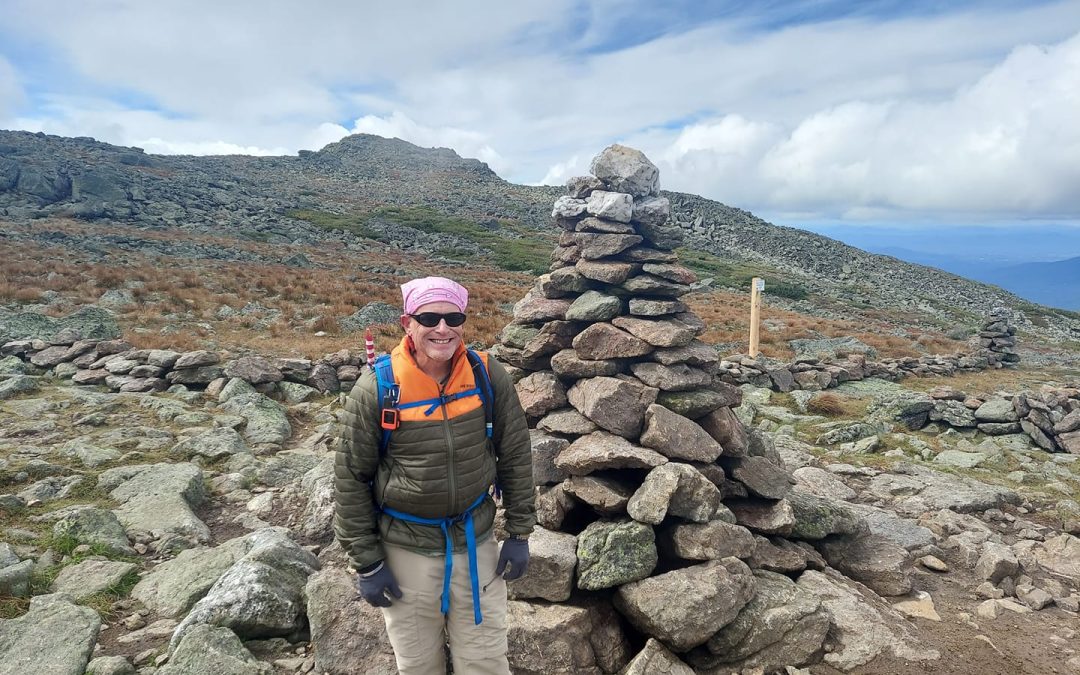
Episode 83 Are We Here Yet? Podcast
Getting Outside Photos Courtesy of E. BeaudryTonight we wanted to share a story that sounds an aweful lot like our stories in a near-post pandemic world. For many of us, there is a deep personal need for time spent in quiet comtemplation amongst the...
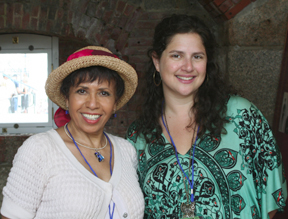
Episode 50 The Jazz Room
Clarinetist Anat Cohen An AWHY? Music Feature Anat Cohen . Photo courtesy of Joan Watson-JonesWe talk with Clarinetist, Anat Cohen. We met with her between performances at the Newport Jazz Festival. She talks about her work with many musicians as well as being a...

Episode 50 Mental Suppository Podcast
50 Episodes Later And We're Finally Talking Star Wars Photo Credit: Bret HerholzIt’s the 50th episode of the Mental Suppository Podcast and we’re talking about Star Wars… finally!! Bret, Jamie and Andrew talk about their memories of watching the Star Wars...

On Public Education
What’s an Actual Day of Teaching 7th Graders in a Public School Really Like? M the Media Project Mick Carlon writes on public education for M the Media Project. He is an internationally recognized author of novels for young adults. Mick Carlon’s Jazz...



Also from M the Media Project




Article Series
Podcasts
Video Channels
News Features
Mental Suppository Podcast
On the Rocks Politica
SMG’s ‘Are We Here Yet’?
Interested in advertising with us? Perhaps you want a unique way to support the economic development work we accomplish while getting access to our intelligent and informed listeners? Join our roster of supporters. Click that button below to find out more.
Get In Touch
Phone: 978-884-6596
"*" indicates required fields
© 2021 SM Graves Associates • Website Designed and Developed by inConcert Web Solutions • Site Map